

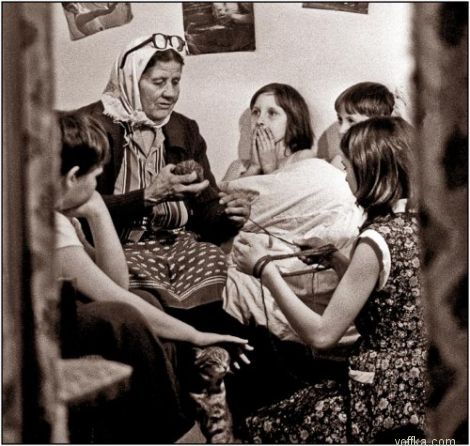
This collection of urban life in Soviet Russia during the 50s and 60s are brilliantly evocative.
via BoingBoing

Blogging has seriously come of age. DailyKos, a leading progressive blog, hosts a convention of bloggers--I think this is the third year. The article below is ample evidence that what once was considered self-serving emotional claptrap has now tipped to the point of significant influence. In fact, some say the power of progressive bloggers is equal to that of right-wing radio. And to think, we knew it when . . . . Thanks to Suburban Guerilla.
Warner was not the only potential presidential hopeful to glad-hand at YearlyKos. Retired Gen. Wesley Clark, a 2004 White House contender, threw an after-hours party Thursday night in a packed bar at the Hard Rock Hotel, though the open bar only included a limited supply of bottled beer and cheap red wine. New Mexico Gov. Bill Richardson showed up Friday morning with breakfast pastries, along with praise for the blogging community and his endorsement of Democrats becoming “the party of [outer] space.” Iowa Gov. Tom Vilsack appeared for an education panel before meeting privately with a small pre-selected group of bloggers, without offering so much as a stick of gum.
But no one could compete with Warner, who chose to treat the emerging and ill-defined world of liberal blogging like a major union or corporate trade group. He brought nearly a dozen staffers, including his political action committee’s five-person “Internet team,” and a camera crew to follow his movements throughout the Riviera Hotel, for later online broadcast. When conventioneers checked in, they were given a goodie bag with a laminated invitation to the Warner party conspicuously swinging from the handle. At Saturday’s lunch, where Warner showed his standard slick biographical video and delivered his entrepreneur-turned-Virginia-governor stump speech, each attendee got a black T-shirt, emblazoned with Warner’s digitally enhanced mug and the words “YearlyKos,” as if he had sponsored the event.
“You know when I look around this room I have rarely seen such energy, such optimism, such hope in one place,” Warner told the crowd. “And I am not just talking about those of you I saw at the Blackjack table at the Stratosphere.” His stump speech was light on specific proposals, and heavy with applause lines about the divisiveness of the Bush administration and the need for Democrats to take back the country.
When he was done, about two-thirds of the audience gave him a standing ovation, many of them clearly impressed with his biography as a red state Democrat and high-tech executive. But dissension was also not far under the surface. Minutes after Warner stepped outside of the convention hall to answer questions from reporters and bloggers, Edward Anderson, a Connecticut blogger whose screen name is DeanFan84, confronted him with a broad-based concern. “Do you understand that a lot of us in the grass roots feel that the money could have been spent better?” Anderson asked the former governor, referring to the Friday night Warner party at the Stratosphere. “We don’t want to join the consultant class. I don’t want our guys getting used to shrimp and martinis.”
The following is excerpted from What Would Jackie Do? An Inspired Guide to Distinctive Living, by Shelly Branch and Sue Callaway. Gotham Books, 2006. via http://blog.guykawasaki.com/.
Noblesse Oblige for Beginners: How to Be a Goodwill Ambassador to Strangers, Colleagues, Malcontents
Jackie preferred hailing taxis to get about in New York City. And in those yellow chariots, she would sometimes lean forward and do what so few ever bother to do: ask how the driver’s day was going. In one case, she beseeched the cabbie to quit his shift in order to get home safely in soggy weather. What good is it, after all, to be a cut above if you don’t let your own splendid qualities trickle down to others?
Coddle bit players. It’s terribly wicked not to give props to all of the people who make your path smoother in life. These include the doorman, the mailman—and if you’re so lucky—the cook and pilot. In Jackie’s case, the list also extended to all sorts of minor politicos. Go beyond tips and nods. As a campaign wife, Jackie was able to recall the names, unprompted, or umpteen mayors and convention delegates. And in the White House, she stunned her new staff by properly addressing members upon their first face-to-face meeting.
Don’t (publicly) criticize your enemies or opponents. Leave such base behavior to modern-day politicians and reality show contestants. Particularly resist the temptation to bad-mouth people by e-mail: There’s nothing worse than electronic slurs, which can be endlessly forwarded. Though surrounded by enemies (political) and jealous types (frumpy women), Jackie refused to get nasty. During the 1960 campaign, she declined to take potshots at Hubert Humphrey. And two decades later, when Nancy Reagan got swamped with negative publicity, Jackie waxed empathetic, going so far as to call her to offer advice on handling the press.
Tap higher powers to help the helpless. After you’ve maxed out your immediate resources, look to your left and right, above and below to harness those six degrees of separation between you and the solution to the problem at hand. Don’t be too proud to ask an influential friend to step in on behalf of someone you know—even if the two have never met. That’s what connections are really for.
In 1980 Jackie summoned medical philanthropist Mary Lasker to help an impoverished sick boy, the son of a manicurist, gain access to proper treatment. As a follow-up to the favor, Jackie wrote her friend Mary a heartfelt note: “Now they don’t feel that they are just a cipher because they are poor,” she scrawled on her Doubleday stationery. “Whatever happens, they know that someone with a noble heart made it possible for them to get the best care they could.”
Turn the other silken cheek. Sometimes you must show people what you are made of by staying elevated when you’d least like to—say, when someone zips into your primo parking space, or snatches the last pair of Loro Piana gloves on sale at Bergdorf’s. Like Jackie, you’d do well to let mild acts of ugliness pass without much fuss.
Traveling with Thomas Hoving, then-director of the Metropolitan Museum of Art, Jackie was stunned—and frightened—by the French paparazzi who swarmed her at a low-key Left Bank restaurant. An infuriated Hoving returned to their hotel, the Plaza Athenee, and demanded that the doorman who disclosed their whereabouts be fired. Informing Jackie of the fait accompli, Hoving recalls, “She got mad at me.” She said: “You suffered a man’s livelihood because of that?”
Mute the call of mammon. The classiest cash is also the quietest. So if you’re fortunate enough to have an endless supply of crisp bills, just don’t crumple them under the noses of those with less. This doesn’t mean you should deprive yourself of fine things. Certainly our lady did not. But wealth does require you to be somewhat stealth about what you’ve got.
Don’t gab on about money, either—yours, your parents’, your boyfriend’s—or your over-the-top plans for it. When Jackie received a $26 million settlement from Aristotle Onassis’s estate, society types needled the widow about how she intended to spend the windfall. “You don’t talk about things like that,” was her stunned reply.
To be a cut above, don’t cut. Even if your social status or connections somehow permit it, resist any temptation to leapfrog over more common folks. This means no line-jumping at Disney World, no flashing that Burberry plaid to snare the next cab. In New York, Jackie waited in crowds like everybody else—or avoided them altogether—rather than nudge her way to the front of movie-house and museum queues.
BLAMESTORMING : Sitting around in a group, discussing why a deadline was
missed or a project failed, and who was responsible.
SALMON DAY: The experience of spending an entire day swimming upstream
only to get screwed and die in the end.
SITCOMs : Single Income, Two Children, Oppressive Mortgage. What Yuppies
turn into when they have children and one of them stops working to stay home
with the kids.
STRESS PUPPY: A person who seems to thrive on being stressed out and
whiny.
IRRITAINMENT : Entertainment and media spectacles that are annoying but
you find yourself unable to stop watching them. The J-Lo and Ben wedding (or
not) was a prime example; Michael Jackson, another.
PERCUSSIVE MAINTENANCE: The fine art of whacking the crap out of an
electronic device to get it to work again.
ADMINISPHERE : The rarefied organizational layers beginning just above
the rank and file. Decisions that fall from the adminisphere are often
profoundly inappropriate or irrelevant to the problems they were designed to
solve.
404 : Someone who's clueless. From the World Wide Web error Message "404
Not Found," meaning that the requested site could not be located.
GENERICA : Features of the American landscape that are exactly the same
no matter where one is, such as fast food joints, strip malls, and
subdivisions.
OHNOSECOND : That minuscule fraction of time in which you realize that
you've just made a BIG mistake. (Like after hitting send on an email by
mistake)
WOOFS : Well-Off Older Folks.
Before we get into the thick of it, consider one more thing: design is not about innovation. Design is about communication. Innovation in design is usually a wonderful byproduct or direct result of a particular need. Design that seeks to foremost be innovative will commonly fall apart under its own stylistic girth.That's among the best creative advice I've ever read. We all want to be clever and smart. It feels so good, and the rewards are enormous. When your livelihood rests on the continuous flow of creativity, it's a pressure no one knows but them what knows.
For a donation of $5.00 per word (5 word minimum), we can have telegrams delivered to people who have passed away. This is done with the help of terminally Ill volunteers who memorize the telegrams before passing away, and then deliver the telegrams after they have passed away. We call this an "afterlife telegram". The $5.00 per word fee, depending on the wishes of the messenger, it is either given to a relative, donated to a charity or used to pay for medical bills. The company does not keep any of the fees from the sale of the telegrams.
Since we can not guarantee delivery nor prove that a message has been delivered successfully, our customers do not pay for "deliveries". They pay for "delivery attempts". What we do guarantee is the following:Go now and read this interview by David Newberger with Chris Locke on blogging. If there were a license to blog, this, Cluetrain and Gonzo Marketing would be the learner's permits.
Of course there is no license--no MBA, CPA, or DDS required--not even good taste, thank God. Just some skin and flesh in the game, if you're man enough to make yourself vulnerable. Because starting all of this and keeping at it is no simple thing. Or maybe it is.
[pretend this paragraph is indented five spaces to indicate quotation] The challenges of writing will present themselves immediately. And the challenges are great. Are you a fool? Are you naive? Are you saying too much? Too little? Are you bold enough to say THAT in public? Are you stupid enough? All sorts of gremlins sit on your shoulder whispering in your ear. Some are encouragements. Some are seductions. Some groundless fears. Some dangerous delusions. How a writer responds to these whisperings will determine what kind of writer he or she will become. It’s a very personal thing. My own approach is to listen carefully, then ignore all of it.
While we're at it, on the notion of 'blooks,' I'd argue that the first blook was Locke's The Bombast Transcripts, featuring "browser-free" content from EGR, published in January 2002.
More nuggets from the interview:Certainly.Well, if you mean influence as it’s usually measured, then the clear answer is the Top 100 hit magnets on Technorati. No one could say, and I wouldn’t suggest, that they’re not having a lot of influence on whomever is hitting their blogs. They must, right? And the more people who hit those sites, the more people will hit those sites. In this sense, we’ve replicated the mass media model. Which is inevitable in some sense. I mean, there will always be a top-10, a top-100, in anything you can measure. It’s like fashion. Beige is the new black. Chartreuse is the new black. Whatever.
Then there’s the very different phenomenon of going to x-random site and reading something, hearing something, seeing something that changes your mind, touches your heart. It could be someone you’ve never heard of. It could be someone whose voice is just emerging. His or her real voice. Real in the sense that it cuts through all the posturing and bullshit and reminds you what you are, what we are. That kind of influence can’t be measured the same way. And it’s possible that, by measuring things that can be easily measured, we miss entirely the things that can’t be measured at all.
With any business or type of work - you have to deal with customers directly or indirectly. Focusing on customer relationship and make sure your products and services are working for them goes long ways to keep your job around. Pat Matson Knapp has written an article on Joe Grant’s “Top 10 List of Client Wants”. All of them can apply to direct customer relationship, and some of them can apply when you indirectly dealing with customers:
- Keep the Principal Involved
- Communicate Effectively
- Be Easy to Work With
- Exceed Expectations
- Keep Your Promises
- Anticipate Their Needs
- Build a Seasoned Team
- Do Good Work
- Hold Their Hand
- Meet Their Goals
Gerry McGovern writes about the dangers of having too much information:
Human beings are much better at dealing with scarcity than with glut. This is particularly true when it comes to information. It has long been accepted wisdom that you can’t have too much information. You can… Your future career hinges on your ability to plan ahead. Resist becoming a news junkie. Resist churning out emails and web pages. Sit back and think hard. In an age of information overload, what you don’t read—what you don’t write—is just as important as what you do.
Don't Shave That Yak!
The single best term I've learned this year.
Apparently turned into a computer term by the MIT media lab five years ago, yak shaving was recently referenced by my pal Joi Ito. (Link: Joi Ito's Web: Yak Shaving)
I want to give you the non-technical definition, and as is my wont, broaden it a bit.
Yak Shaving is the last step of a series of steps that occurs when you find something you need to do. "I want to wax the car today."
"Oops, the hose is still broken from the winter. I'll need to buy a new one at Home Depot."
"But Home Depot is on the other side of the Tappan Zee bridge and getting there without my EZPass is miserable because of the tolls."
"But, wait! I could borrow my neighbor's EZPass..."
"Bob won't lend me his EZPass until I return the mooshi pillow my son borrowed, though."
"And we haven't returned it because some of the stuffing fell out and we need to get some yak hair to restuff it."
And the next thing you know, you're at the zoo, shaving a yak, all so you can wax your car.
This yak shaving phenomenon tends to hit some people more than others, but what makes it particularly perverse is when groups of people get involved. It's bad enough when one person gets all up in arms yak shaving, but when you try to get a group of people together, you're just as likely to end up giving the yak a manicure.
Which is why solo entrepreneurs and small organizations are so much more likely to get stuff done. They have fewer yaks to shave.
So, what to do?
Don't go to Home Depot for the hose.
The minute you start walking down a path toward a yak shaving party, it's worth making a compromise. Doing it well now is much better than doing it perfectly later.
As part of the conference within a conference for students, Michael Bierut listed 20 courses he did not take in design school (I think I got all of them):
Semiotics
Contemporary Performance Art
Traffic Engineering
The Changing Global Financial Marketplace
Urban planning
Sex Education
Early Childhood Development
Economics of Commerical Aviation
Biography as History
Introduction to Horticulture
Sports Marketing in Modern Media
Modern Architecture
The 1960s: Culture and Conflict
20th Century American Theater
Philanthropy and Social Progress
Fashion Merchandising
Studies in Popular Culture
Building Systems Engineering
Geopolitics, Military Conflict, and the Cultural Divide
Political Science: Electoral Politics and the Crisis of Democracy
His point was that design is just one part of the job. In order to do great work, you need to know what your client does. How do you design for new moms if you don't know anything about raising children? Not very well, that's how. When I was a designer, my approach was to treat the client's knowledge of their business as my biggest asset...the more I could get them to tell me about what their product or service did and the people it served (and then talk to those people, etc.), the better it was for the finished product. Clients who didn't have time to talk, weren't genuinely engaged in their company's business, or who I couldn't get to open up usually didn't get my best work.
Bierut's other main point is, wow, look at all this cool stuff you get to learn about as a designer. If you're a curious person, you could do worse than to choose design as a profession.
This website is devoted to lexpionage, the sleuthing of new words and phrases. These aren't "stunt words" or "sniglets," but new terms that have appeared multiple times in newspapers, magazines, books, Web sites, and other recorded sources.
"My 8 year old son is so creative he's going to be an artist." How many times have you heard that? Naïve art – young children are natural at it. It's the first rain in the desert, new run-off paths are spontaneously created; the water forges streams where there were none. An 8 year old discovers crayons uninhibited by life experience, ego, and deadlines. Nearly every connection is a new one. She hasn't yet learned how not to be creative.
When we say that art is immature, what do we mean? We don't necessarily mean that the artist lacks originality; more likely, we mean that its originality is born by an artist who doesn't yet know enough to be interesting, or deliver emotion in a compelling way. The moment a child realizes their art is immature, the crayons stand a good chance of being surrendered.
Information and experience are like food for the creative process. It's raw substance. Information needs to be digested to brain-fat so it can re-immerge as mature creative energy. It's as if it needs to be inculcated into our souls before we are free to randomize it into original creative expression. If we don't digest it, a creative product – art, innovation, music, etc. – is sure to be more derivative that original. Creativity is using our unique inner selves to rearrange the raw material.
Society teaches the creativity out of our students. If X, then Y is easy to teach. If X, then Y gets results. It generates tangible and immediate ROI. Do this and get that result. Take an alternative path and risk failure or – even worse – ridicule. Research creative history and learn what got rewarded and what was ignored. Teach high craft and call it high art. Creativity is too soft and round; there is nothing to grab onto. There are often no clean results to judge. Creativity is messy but we all crave the rewards.
When do we begin to fear our own creativity? I believe it is the point at which we began to market ourselves. True creativity is deeply personal because we have to create new streams – new run-off paths in our souls. Risking creative rejection is terrifying. It's rejection that cuts so deep it's worse than a High School crush laughing when you finally get the nerve to ask her to the movies (I digress, forgive me). Creativity takes courage. Being vulnerable takes guts. Needed is a willingness to be rejected for what is among the most personal of expressions. The stakes are high.
Taking a less risky path is more about fine craft than innovation. I'm reminded of advice from an emerging professional as I left college: he told me, "On the outside, there is no room for 'b" quality work." In other words: it is the end of experimentation without consequences. Experiment all you want on your own, but come to work with your "A" game: bring what you know will meet approval.
Hugh MacLeod of Gaping Void fame uses the Sex and Cash theory to explain how creativity and business relate. Re: Sex and Cash, "This tense duality will always play center stage. It will never be transcended." Creativity is sexy. The more you get paid for your creativity, the less sexy it is. I believe there are laws governing sex and cash, are there not? Do we dare go counter culture?
The occasional and often publicized young creative genius can lull us into the false impression that creativity is only for the immensely and naturally talented. "I can't do that, I've never been creative." The truth is creativity is hard work. Creative people are talented because they put in the hours. There is a passion for the doing; they can't not-do, and the results are secondary to the act but no less important than their original idea. Does this confuse you?
Whether you're an artistic temperament seeking structure or a rational temperament seeking imagination, creativity is constructive only when related to others. If you've heard improvisational abstract Jazz you know what I mean. An artist's passion can be intensely creative but the results can fail to inspire others – it's self indulgent.
Ever try to talk through your raw creative ideas with another? Sounded dim, didn't it? People often reject another's raw creativity; it's simply too intimate until it takes a form prone to mutual acceptance. Raw creative ideas aren't ready for prime time – they need at least minimal crafting. Like a beautifully written song sung out of key – poor craft masks the emotion or defeats the function.
For those of you in need of concrete illustration, this should keep you busy:
Creativity x Craft x Emotion = Art
Creativity x Craft x Function = Innovation
[This should help with the test at the end, so pay attention.]
However flawed you may find these equations; my point is that emotion and function are the human relational elements to art and innovation. Without emotion, art appears dry and mechanical. Without function, innovation is pure Rube Goldberg. Craft is the vehicle of creativity. Crafting the creativity allows the emotion and function to "sing".
The good news: Creativity is portable. The bad news: fine Craftsmanship is not. When people say I'm a great photographer, most are telling me that I've honed the craft of photography beyond the ordinary. I can't move my honed skills from photography to writing, to music, to business, but I can take my creativity with me. It's fluid that way. We begin to recognize talent when an accomplishment tipping point is reached in the three elements of our creativity equation.
Talent doesn't need a creative process per se. Talent finds formulaic process stifling: a canvas and a deadline, however, is a different story. Talent will surface no matter what; it won't be denied. Talent doesn't need the best camera to make great imagery. Just as money can't buy contentment, the best guitar, camera, or paints can't aid creativity, only help polish the craft.
Process helps companies hide their poor creative talent. "We have a great creative process" that we use to get our accountants to think "out of the box". Ugh! Isn't that what Enron boasted? Remember what I said about putting in the hours? Either a company hires those with creative passion and nurtures it with a catalytic culture or it doesn't. Usually it doesn't. Reflecting on the process undermines the ability, it takes us back to "if X then Y" and the crayons stay in the box.
Watching creativity is like watching a cow lactate – all day long nothing is witnessed, then, WHAM, milk. Once you have your milk, only then should you send it through the process. Make sure it solves the problem. Make sure the Function and the Craft in the Innovation equation is honed to a fine edge. Bad milk? Keep moving.
Somewhere around puberty we accumulate enough junk in our minds that we need to organize it: make it linear. Random thought is no longer an efficient way to make it through the day and stay sane. Most of us lay down our crayons. Those who don't surrender, usually become artists, musicians, fashion designers or advertising art directors who wander through the desert waiting for rain.
| The first and last thing |
|


